How Spotify Uses Multi-Agent AI to Revolutionize Advertising
In the world of digital advertising, personalization and efficiency are key. Spotify's engineering team tackled a structural challenge by deploying a multi-agent architecture—not just as another AI feature, but as a fundamental redesign. This approach involves multiple specialized AI agents working together to optimize ad placement, targeting, and creative selection. Below, we explore the most common questions about this system and how it makes advertising smarter.
What is a multi-agent architecture in advertising?
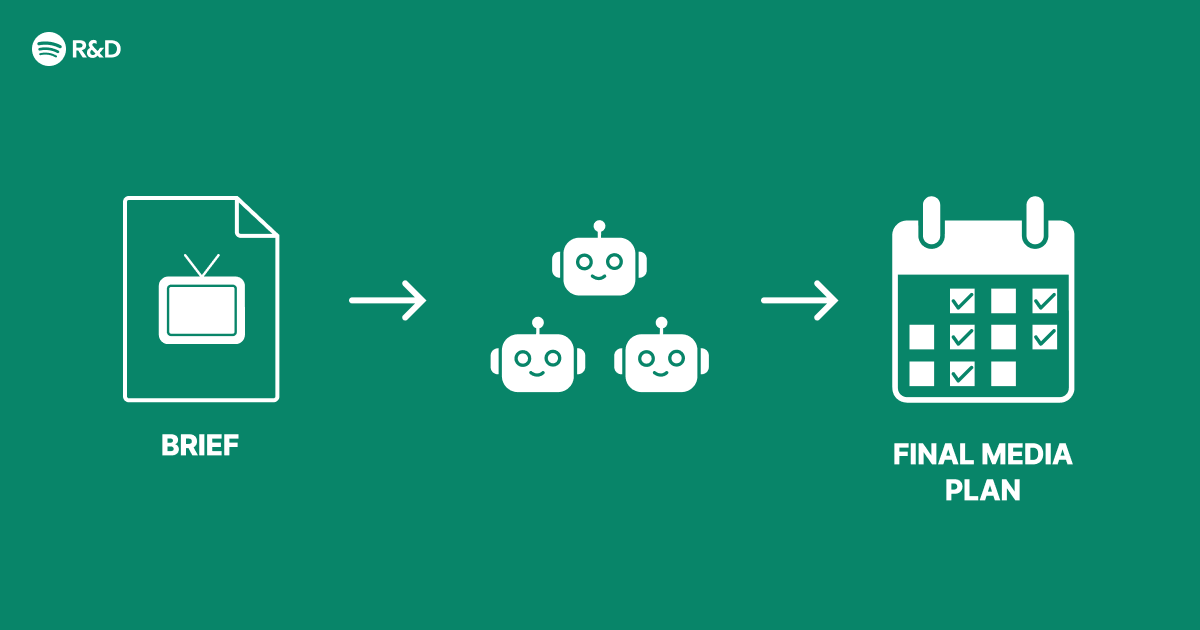
A multi-agent architecture is a system where multiple autonomous AI agents collaborate to solve complex problems. In advertising, each agent handles a specific task—like analyzing user behavior, selecting ad creatives, predicting engagement, or managing budgets. These agents communicate and negotiate with each other, sharing insights to deliver more relevant ads. Unlike a single monolithic model, multi-agent setups are more flexible, scalable, and robust. For example, one agent might focus on contextual relevance while another optimizes for user intent. Together, they produce a smarter ad experience that adapts in real-time to both user preferences and business goals.
Why not just use a single AI model?
A single AI model can be effective for straightforward tasks, but advertising involves many interdependent factors: user signals, campaign constraints, creative variety, and business metrics. Using one model often leads to compromises—it might optimize for clicks but ignore brand safety, or favor short-term revenue over user satisfaction. A multi-agent architecture breaks down the problem into manageable pieces. Each agent specializes deeply in its domain, leading to better performance overall. Moreover, this architecture is easier to maintain and update. If a new ad format emerges, you only need to retrain or replace the agent handling that format, not the entire system. This reduces risk and speeds up iteration.
How do the agents collaborate with each other?
Collaboration happens through a structured communication protocol. Agents share data and decisions via a central message bus or a shared knowledge base. For example, the user profiling agent might send a signal about a listener's preferred genres to the ad selection agent. The ad selection agent then queries the creative optimization agent for the best performing ad variants. These interactions are governed by rules and negotiation strategies—some agents vote on decisions, while others use weighted contributions. This ensures that the final ad delivery respects all constraints, such as budget limits, frequency caps, and user relevance. The system continuously learns from outcomes and adjusts agent behaviors over time.
How does this improve ad performance over traditional methods?
Traditional ad systems often rely on rule-based targeting or simple machine learning models that treat all users similarly. With multi-agent architecture, each ad impression is the result of a tailored consensus among specialist agents. This leads to higher relevance, better engagement rates, and improved return on investment for advertisers. For example, an agent tracking real-time context might pause an ad during a sad song segment, while another agent ensures the ad isn't shown too frequently. The coordination reduces wasted impressions and user annoyance. A/B tests at Spotify showed significant lifts in both click-through rates and user satisfaction scores compared to previous monolithic models.

What challenges did Spotify face when building this system?
The biggest challenge was designing the coordination layer so that agents don't conflict or cause unintended outcomes. For instance, one agent might try to maximize bids while another wants to minimize costs—without alignment, the system could oscillate or fail. Spotify's engineers solved this with a combination of:
- Prioritization rules that define which agent's decision takes precedence in a conflict.
- Feedback loops where agents monitor each other's outputs and adjust.
- Synthetic testing to simulate scenarios before deployment.
What future possibilities does this architecture open up?
Multi-agent architecture is highly extensible. Spotify can easily add new agents for emerging tasks, such as voice-assisted ad selection for podcasts, or privacy-preserving agents that operate on anonymized data only. The system also enables more transparent and explainable AI: because each agent's role is clear, advertisers can understand why a particular ad was shown. Looking ahead, these agents could learn to negotiate in real-time with external ad exchanges, creating a truly dynamic marketplace. As Spotify continues to innovate, this foundation will allow advertising to become even more personal, efficient, and user-friendly.