10 Breakthroughs in Cryogenic Fuel Technology for Deep Space Exploration
Imagine a gas station in space, where spacecraft can refuel and continue their journeys to the Moon, Mars, and beyond. That vision is closer than ever thanks to NASA's latest technology demonstration: the Liquid Oxygen Flight Demonstration (LOXSAT). Launched in partnership with Eta Space and Rocket Lab, this mission tests 11 critical cryogenic fluid management technologies in low Earth orbit. Cryogenic propellants—super-cold liquids like liquid oxygen and hydrogen—are essential for deep space missions, but handling them in microgravity presents unique challenges. Boiloff, pressure control, and accurate gauging are just a few hurdles. Here are 10 key things you need to know about this groundbreaking effort and how it paves the way for future exploration.
1. What Are Cryogenic Propellants and Why Do They Matter?
Cryogenic propellants are gases cooled to extremely low temperatures—below -150°C (-238°F)—until they become liquids. Liquid oxygen (LOX) and liquid hydrogen are prime examples. These super-cold fuels pack more energy per unit volume than traditional storable propellants, making them ideal for powerful rocket engines. However, because they boil off (vaporize) easily, especially in the vacuum of space, managing them requires advanced technologies. Without effective cryogenic fluid management, long-duration missions would lose precious fuel to evaporation, limiting how far spacecraft can travel. LOXSAT aims to solve these issues, enabling future propellant depots that can replenish spacecraft in orbit—a critical step for sustainable exploration of the Moon and Mars.
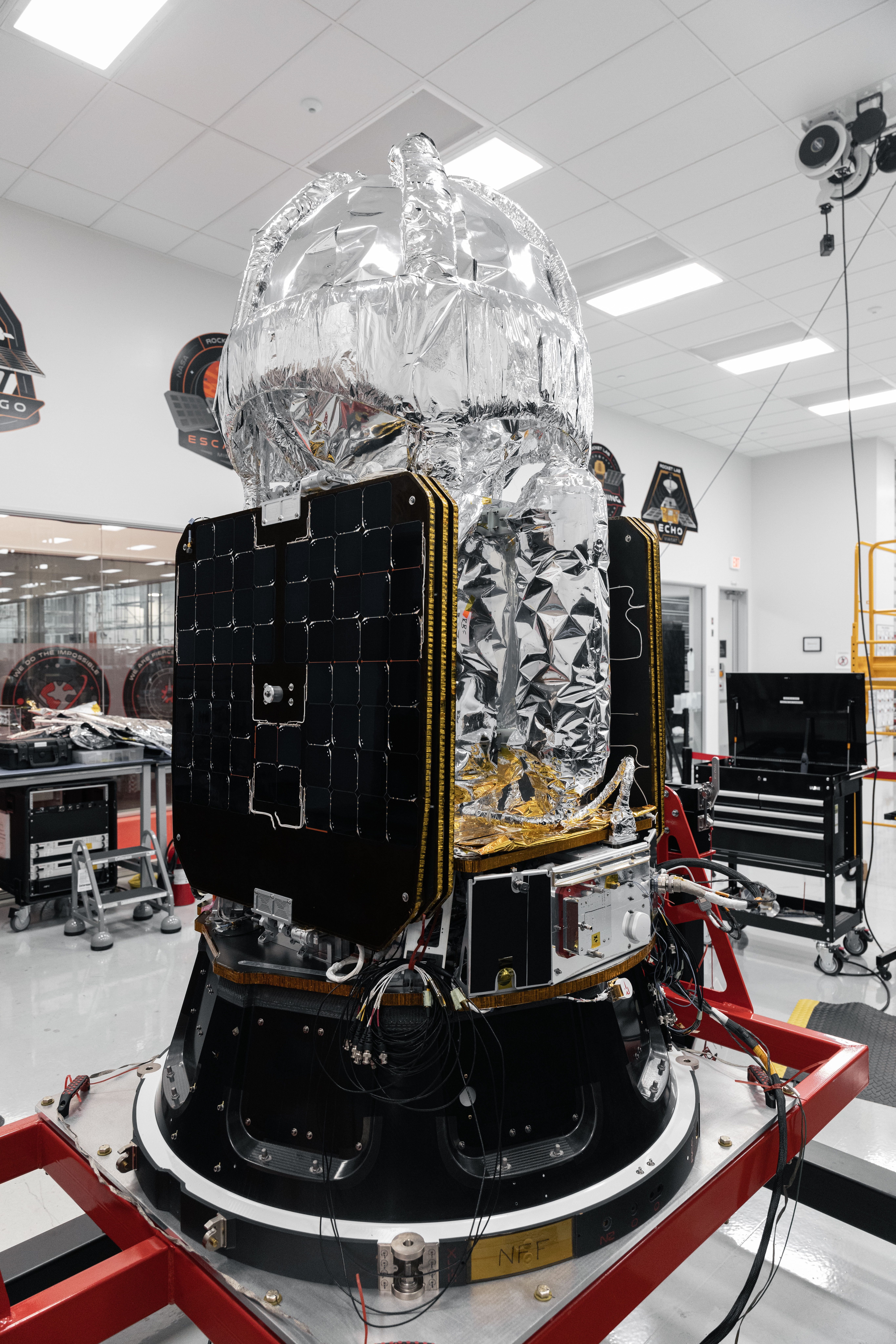
2. LOXSAT: A Nine-Month Mission to Test 11 Technologies
The Liquid Oxygen Flight Demonstration (LOXSAT) is a technology demonstrator that will operate for nine months in low Earth orbit. During this period, it will test 11 different cryogenic fluid management technologies in a realistic space environment. These technologies address core challenges such as reducing boiloff, transferring propellant between tanks, maintaining tank pressure, and measuring propellant levels accurately. Each test provides crucial data that engineers and scientists can use to refine designs for future in-space propellant depots. LOXSAT is not just a single experiment—it's a comprehensive suite of innovations that collectively bring us closer to making long-duration deep space missions a reality.
3. The Key Partners: NASA, Eta Space, and Rocket Lab
LOXSAT is a collaborative effort between NASA, Eta Space of Rockledge, Florida, and Rocket Lab of Long Beach, California. Eta Space built the LOXSAT payload as part of a NASA Tipping Point opportunity—a program that funds innovative technologies with high potential for advancing space exploration. Rocket Lab provides the spacecraft (a Photon satellite bus) and launch services, using their Electron rocket to lift LOXSAT into orbit. The launch will occur from Rocket Lab's Launch Complex 1 on New Zealand's Mahia Peninsula, with a target date no earlier than July 17. This public-private partnership exemplifies how NASA leverages commercial capabilities to achieve ambitious goals faster and more cost-effectively.
4. Addressing Boiloff: Keeping Cryogenic Propellants Cold
One of the biggest challenges with cryogenic propellants is boiloff—the loss of liquid due to evaporation caused by heat from the Sun, spacecraft electronics, or even the propellant's own warmth. In microgravity, without convection, heat can create unpredictable vapor pockets, making boiloff even harder to manage. LOXSAT will test insulation techniques, such as multilayer blankets and vapor-cooled shields, to minimize heat ingress. Additionally, it may explore active cooling methods like cryocoolers to recondense boiloff vapors back into liquid. Success here means future propellant depots can store LOX for months or years without significant loss, enabling extended missions and reusable spacecraft.
5. Propellant Transfer: The 'Nerve' of Space Refueling
Transferring cryogenic propellants between tanks—whether from a depot to a spacecraft or between storage tanks—is extremely tricky in zero gravity. Without gravity to push liquid toward an outlet, engineers must use innovative methods such as capillary action, surface tension, or small thrusters to settle the liquid. LOXSAT will test a propellant transfer system that demonstrates how to move liquid oxygen efficiently in microgravity. This technology is analogous to the hoses and pumps at a terrestrial gas station, but adapted for space. Reliable transfer is essential for refueling operations, allowing spacecraft to top off their tanks before heading to deep space destinations.
6. Tank Pressure Management: Avoiding Explosions and Implosions
As cryogenic propellants boil off, the vapor increases pressure inside the tank—a dangerous condition known as pressure rise. Conversely, when propellant is transferred out, pressure drops, which can cause the tank to collapse. LOXSAT will test pressure control technologies, including pressure relief valves, vent systems, and maybe even active pressurization using thrusters. The goal is to maintain a safe and stable pressure range throughout the mission. For depots, this means tanks can be kept at optimum pressure for months, and when a spacecraft docks for refueling, the depot can quickly boost pressure to push propellant into the receiving vehicle's tank.
7. Gauging Fuel Levels: How Much Propellant Is Left?
Knowing exactly how much cryogenic propellant remains in a tank is critical for mission planning—both for the depot and the spacecraft being refueled. In microgravity, traditional liquid-level sensors fail because the liquid doesn't settle in a predictable puddle. LOXSAT will evaluate cryogenic gauging techniques such as radio frequency mass gauging, capacitance probes, and thermal transient sensors. These methods use electromagnetic waves, electrical properties, or heat transfer to determine the amount of liquid and vapor present. Accurate gauging prevents overfilling or running dry, ensuring efficient and safe operations.
8. The Tipping Point Program: Accelerating Space Tech
LOXSAT was selected under NASA's Tipping Point program, which is part of the Space Technology Mission Directorate. This program identifies technologies that are at a 'tipping point'—not yet ready for full-scale application but with high potential to transform space capabilities. By partnering with industry, NASA helps mature these technologies through flight demonstrations. Eta Space's LOXSAT payload is a perfect example: it builds on years of ground testing and takes the next step of validating performance in orbit. The Tipping Point approach accelerates the timeline from concept to deployment, making NASA and its partners more agile in solving the challenges of deep space exploration.
9. NASA's Cryogenic Fluid Management Portfolio
The LOXSAT team is part of NASA's Cryogenic Fluid Management (CFM) Portfolio Project, led by Marshall Space Flight Center in Huntsville, Alabama, with contributions from Glenn Research Center in Cleveland and Kennedy Space Center in Florida. The CFM portfolio includes over 20 individual technology development activities, ranging from materials research to subsystem testing. LOXSAT is one of the most advanced demonstrations, feeding data back into the portfolio to refine other projects. This coordinated effort ensures that all aspects of cryogenic fluid management—boiloff, transfer, pressure, gauging—advance together. The ultimate aim: create a robust infrastructure for in-space propellant depots that can support humanity's expansion into the solar system.
10. The Big Picture: Enabling a Sustainable Human Presence in Deep Space
Why all this fuss over cold liquids? Because cryogenic propellants are the key to efficient, powerful spacecraft. With depots like those informed by LOXSAT, spacecraft could launch with less fuel and refill in orbit before heading to the Moon or Mars. This reduces launch costs and opens possibilities for reusable landers, tugs, and orbitals. The data from LOXSAT will feed into designs for NASA's Artemis program and beyond. Imagine a future where a depot in lunar orbit refuels a lander before descending to the Moon's surface, or where a tanker leaves Earth orbit and transfers propellant to a Mars-bound ship. LOXSAT is a small but mighty step toward making that vision a reality.
From tackling boiloff to mastering gauging, the 11 technologies aboard LOXSAT represent a quantum leap in cryogenic fluid management. As this nine-month mission unfolds, every test, every data point brings us closer to the gas stations of the sky. Whether you're a space enthusiast or a future astronaut, keep your eyes on New Zealand's Mahia Peninsula—because after July 17, the path to deep space just got a little easier to navigate.