Wind and Solar Heartlands Now Represented by Party Seeking to Scrap Renewables
Renewable Energy Strongholds Now Under Anti-Renewables Representation
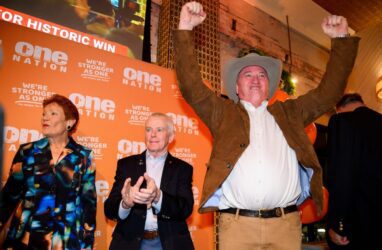
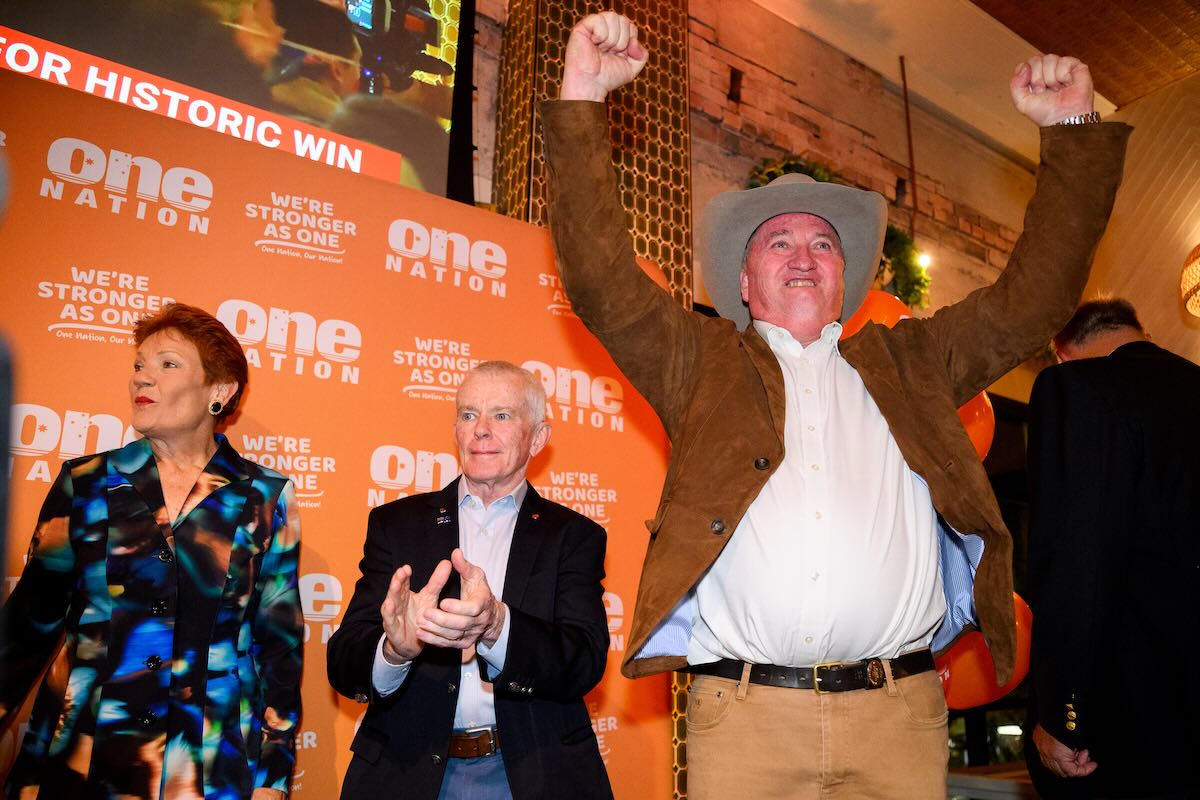
Breaking News — Pauline Hanson’s One Nation has secured a landmark victory in the federal seat of Farrer, placing the party at the center of two of Australia’s most productive wind and solar regions. Yet the party’s official policy calls for the immediate cancellation of these projects in favor of coal, gas, and nuclear power.
The contradiction has stunned energy analysts and local renewable advocates, who warn the move could stall billions of dollars in clean energy investment and undermine Australia’s climate targets.
“It’s a stunning paradox — you represent constituents whose economic future is tied to renewables, while actively campaigning to shut them down,” said Dr. Emily Tran, a senior energy policy fellow at the Australian National University. “This is a direct threat to the energy transition in these key regions.”
Background
Farrer, in southern New South Wales, has become a hub for wind and solar farms, including the massive Riverton Solar Farm and the Bomen Solar Farm. Neighboring the seat of Parkes, also represented by One Nation, the two electorates now cover some of the nation’s highest-potential renewable energy zones.
One Nation’s energy platform, released earlier this year, calls for a halt to all new wind and solar developments, citing concerns over reliability and cost. Instead, it pushes for expanded coal mining, new gas projects, and a feasibility study into nuclear power.
Local farmers and business owners, many of whom lease land for turbines and panels, have expressed alarm. “A lot of us rely on these lease payments to get through drought,” said Johnno Wells, a mixed-crop farmer west of Hay. “It’s our income, and now our own MP wants to take it away.”
The Data Behind the Regions
- Farrer alone hosts over 800 MW of commissioned wind and solar capacity, enough to power approximately 320,000 homes.
- Parkes adds another 450 MW in operational projects, with a pipeline of more than 1 GW under development.
- Combined, the two seats contribute nearly 5% of Australia’s total grid-connected renewable generation.
“The irony is that these are exactly the regions that could lead Australia’s shift to net-zero,” said Professor Andrew Stock, a board member of the Australian Energy Market Operator (AEMO). “But if the local representative actively blocks projects, we lose that opportunity.”
What This Means
The One Nation victory signals a deepening political divide over energy in rural Australia. While many farming communities have embraced renewables as a second income, others view them as a threat to traditional industries and landscape.
“This is going to create a tug‑of‑war between pro-renewable investors and an increasingly anti-renewable political voice,” said Dr. Tran. “It could also embolden other parties to adopt similar positions, slowing national progress.”
For the renewable energy sector, the message is clear: even in the country’s best wind and solar zones, political support is not guaranteed. Project developers may now face additional pushback at the local and federal levels, particularly in electorates held by One Nation.
“We are watching a perfect storm — great renewable resources, but a representative who despises them,” said Kane Thornton, CEO of the Clean Energy Council. “Australia cannot afford to ignore this contradiction if it wants to meet its 2030 emission reduction goals.”