Securely Empower AI Agents with AWS: The AWS MCP Server Goes GA
AI agents and coding assistants are revolutionizing how we build on AWS, but granting them secure, real-time access to cloud resources without exposing credentials has been a persistent challenge. Enter the AWS MCP Server, now generally available as part of the Agent Toolkit for AWS. This managed remote Model Context Protocol (MCP) server gives AI agents safe, authenticated access to all AWS services through a compact set of tools, ensuring they work with current documentation and best practices—not outdated training data. In this Q&A, we explore how the AWS MCP Server works, its new features, and why it’s a game-changer for production-ready infrastructure.
What is the AWS MCP Server and why was it created?
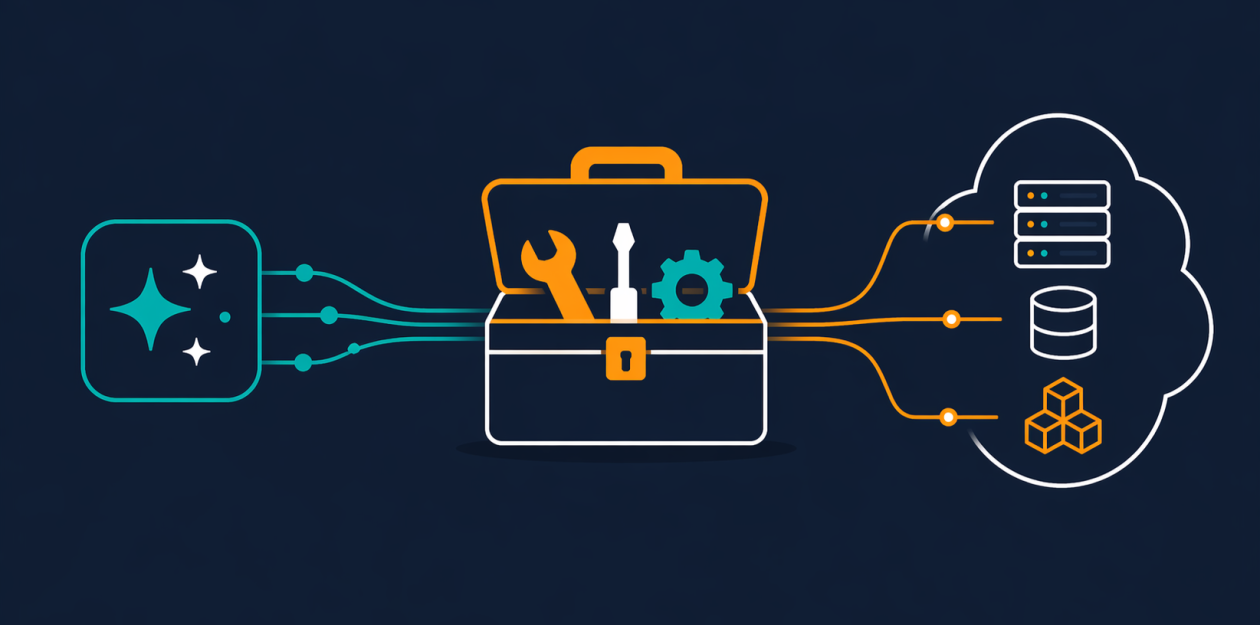
The AWS MCP Server is a managed remote server that implements the Model Context Protocol (MCP), enabling AI agents and coding assistants to interact with AWS services in a secure, authenticated manner. It was created to solve a fundamental problem: agents often fail when working with AWS at depth because they rely on stale training data, misuse CLI over CDK/CloudFormation, and generate overly permissive IAM policies. This leads to demo-quality infrastructure that isn’t production-ready. By providing a small, fixed set of tools, the server gives agents real-time access to AWS APIs (over 15,000 operations) and current documentation, all while respecting existing IAM credentials. This ensures agents can build robust infrastructure without handing them “the keys to the kingdom.”
How does the AWS MCP Server ensure secure, authenticated access to AWS services?
Security is central to the AWS MCP Server design. It uses the call_aws tool, which executes any AWS API operation using the agent’s existing IAM credentials—no separate permissions required. With general availability, the server now supports IAM context keys, allowing fine-grained access control expressed in a standard IAM policy. This means you no longer need a dedicated IAM permission for the server itself. Agents operate within your existing identity framework, so every API call is authenticated and authorized according to your organization’s policies. Additionally, the run_script tool executes Python scripts in a sandboxed environment that inherits IAM permissions but has no network access—protecting your local file system and shell while enabling complex data processing. This layered approach ensures agents are powerful yet tightly constrained.
What tools does the AWS MCP Server provide to improve AI agent effectiveness?
The AWS MCP Server offers a compact, purpose-built toolset that doesn’t consume the model’s context window unnecessarily. Key tools include:
- call_aws: Executes any of 15,000+ AWS API operations using the agent’s IAM credentials. New APIs are supported within days of launch.
- search_documentation and read_documentation: Retrieve current AWS documentation and best practices at query time, so agents always work from up-to-date information.
- run_script: Lets the agent write and run short Python scripts server-side in a sandboxed environment (no network, inherits IAM permissions) for chaining multiple API calls and processing data efficiently in a single round-trip.
These tools address common agent weaknesses—like outdated knowledge and overly broad IAM policies—by providing real-time access and guided best practices. The result is faster, more context-efficient workflows that produce production-ready infrastructure.
How does the AWS MCP Server keep agents up-to-date with AWS documentation?
AI coding agents often rely on training data that can be months out of date, missing newly launched services like Amazon S3 Vectors, Amazon Aurora DSQL, or Amazon Bedrock AgentCore. The AWS MCP Server solves this with integrated documentation tools: agents can search and read the latest AWS documentation at query time, ensuring they work with current guidance. With general availability, documentation retrieval no longer requires authentication, making it even easier for agents to access this critical resource without additional configuration. By coupling real-time documentation with the ability to call any AWS API, agents can build infrastructure that reflects the latest best practices and service offerings, moving beyond demo-quality solutions to production-grade deployments.

What are the new capabilities introduced with general availability?
General availability of the AWS MCP Server brings several key enhancements:
- IAM context keys support: You no longer need a separate IAM permission to use the server. Fine-grained access is expressed directly in standard IAM policies, simplifying security management.
- Authentication-free documentation retrieval: Agents can access the latest AWS docs without any authentication overhead, speeding up workflows.
- Reduced token consumption: Each interaction now uses fewer tokens, which is critical for complex, multi-step agent workflows where context window limits are a concern.
- Introduction of Skills: A transition from Agent SOPs to Skills (see Q7), providing curated guidance for specific tasks.
These updates make the AWS MCP Server more secure, efficient, and developer-friendly, lowering the barrier to giving AI agents powerful yet controlled AWS access.
How does the run_script tool enhance agent performance?
The run_script tool allows an agent to write a short Python script that executes server-side in a sandboxed environment. This sandbox inherits the agent’s IAM permissions but has no network access, so it can process data without exposing your local file system or a shell. The key performance benefit is efficiency: when an agent needs to call multiple AWS APIs and combine results, doing so one call at a time is slow and quickly consumes context window tokens. With run_script, the agent can chain API calls, filter responses, and compute results in a single round-trip. This reduces latency and token usage, enabling more complex multi-step workflows that complete faster. It’s a game-changer for tasks like data aggregation, cross-service orchestration, and real-time analysis—all while maintaining strict security boundaries.
What is the transition from Agent SOPs to Skills and why does it matter?
The most significant addition with general availability is the shift from Agent SOPs (Standard Operating Procedures) to Skills. Skills provide curated guidance and best practices for specific tasks that AI agents frequently perform on AWS, such as building serverless applications or setting up CI/CD pipelines. Unlike static SOPs, Skills are dynamically updated and tailored to the agent’s current workflow, offering step-by-step recommendations and code snippets. This matters because it reduces the dependency on the agent’s training data—often outdated—and ensures best practices are followed for production-ready infrastructure. Skills make agents more autonomous and reliable, helping them avoid common pitfalls like over-permissioned IAM policies or misconfigured services. This transition underscores the AWS MCP Server’s role in moving beyond demo demos to real-world, scalable deployments.