10 Lessons from Meta's WebRTC Modernization: Escaping the Forking Trap
At Meta, real-time communication (RTC) powers everything from Messenger and Instagram video calls to low-latency cloud gaming and VR casting. To serve billions, Meta relied on a specialized fork of WebRTC—but permanent forks drift from upstream, creating a maintenance nightmare. Here's how they broke free, modernizing over 50 use cases with a dual-stack approach, continuous upgrades, and A/B testing. These 10 lessons reveal the strategy behind escaping the forking trap.
1. The Forking Trap: Why Internal Forks Die
When you fork an open-source project for internal optimizations, you start with good intentions. But as upstream evolves and your custom features pile up, merging external commits becomes prohibitively expensive. Meta faced this: their WebRTC fork diverged so much that reaping community bug fixes, security patches, and performance improvements was nearly impossible. The solution? A modular architecture built on the latest upstream version rather than a permanent fork. This lesson underscores that while forking seems efficient short-term, it cuts you off from the community's collective progress—a trap that Meta successfully escaped.
2. Dual-Stack Architecture: Running Two WebRTCs Simultaneously
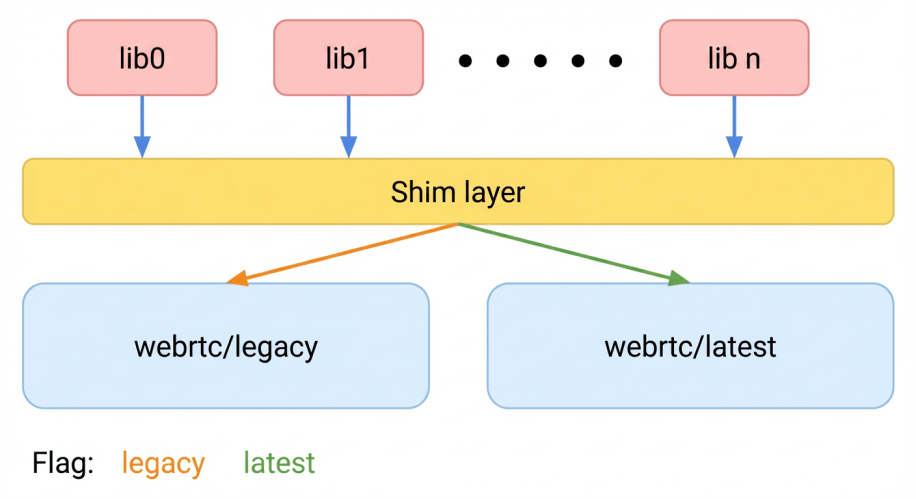
To enable safe A/B testing, Meta needed both the legacy fork and the new upstream-based version in the same app. They built a dual-stack architecture that could dynamically switch users between versions. This allowed them to compare performance, reliability, and feature parity without a risky big-bang upgrade. The key was ensuring both stacks could coexist—something that violates the C++ One Definition Rule (ODR) if not handled carefully. By isolating symbols and using custom build configurations, Meta made dual-stack deployment a reality across all 50+ use cases.
3. Static Linking Two Versions Without Symbol Collisions
Statically linking two WebRTC versions in the same binary normally triggers thousands of ODR violations. Meta solved this by wrapping one version’s symbols in a unique namespace and using linker tricks to avoid collisions. This allowed them to build both the legacy and new WebRTC libraries into a single executable, enabling seamless A/B tests without requiring a separate process or dynamic loading. The technique preserved binary size efficiency—critical for mobile apps—while giving engineers confidence to roll out changes gradually.
4. Continuous Upgrade Workflows: Never Fall Behind Again
Once Meta escaped the fork, they needed a process to stay current with upstream WebRTC releases. They established automated workflows that pull the latest community code, apply Meta's proprietary patches on top, and run extensive integration tests. Each new upstream version is A/B tested against the production fork before full rollout. This continuous upgrade cycle ensures Meta benefits from every bug fix and performance improvement the WebRTC community contributes—without the drift that plagued the old fork.
5. A/B Testing Every Upstream Release Before Rollout
Upgrading a library used by billions is risky. Meta mitigated this by A/B testing each new upstream release across a small percentage of users first. Their dual-stack architecture made this possible: they could assign a user to the new version while the rest stayed on the old. Metrics like call quality, connection success rate, and latency were compared. Only when the new version proved superior (or at least non-regressing) did they expand the rollout. This data-driven approach prevented catastrophic regressions and built confidence in the upgrade process.
6. Migrating 50+ Use Cases from Fork to Modular Architecture
Meta's WebRTC fork powered diverse use cases: Messenger video calls, Instagram live streams, cloud gaming, VR casting, and more. Each had custom optimizations. Migrating all 50+ to the new architecture required reimplementing those optimizations as modular components that plug into the upstream skeleton. This took years but paid off: the new architecture is cleaner, easier to maintain, and aligned with community standards. The migration was done incrementally—use case by use case—ensuring each transition was tested and stable.
7. Proprietary Enhancements on a Standard Skeleton
Meta didn't just use upstream WebRTC raw—they injected their own high-performance implementations of key components (e.g., network stack, codec adaptations). But instead of forking the entire library, they built these as replaceable modules within the new architecture. This approach keeps the core WebRTC skeleton up-to-date while Meta's secret sauce lives in separate, well-encapsulated parts. It's a best practice for any company needing customizations without sacrificing community compatibility.
8. Performance, Binary Size, and Security Wins
The modernization delivered tangible improvements. By leveraging upstream optimizations, Meta saw lower latency and better call quality. Binary size shrank because they could strip out unused code paths that the fork had accumulated. Security also improved: the new architecture made it easier to apply upstream patches quickly, closing vulnerabilities that would have lingered in the old fork. These benefits justified the multiyear effort and proved that escaping the forking trap is worth the investment.
9. The Monorepo Challenge: Integrating Two Libraries
Meta's monorepo environment added complexity: the build graph and static linker made it hard to introduce multiple WebRTC versions. Engineers had to carefully manage dependencies and ensure that legacy and new code didn't conflict. Their solution involved custom Bazel build rules and symbol visibility controls. This lesson highlights that monorepo-friendly architectures are essential for large-scale A/B testing of foundational libraries.
10. Lessons for Any Team Using Open-Source Libraries
Meta's journey offers universal takeaways: (1) Avoid permanent forks—use modular overlays instead. (2) Invest in A/B testing infrastructure before upgrading. (3) Solve ODR violations early with namespace isolation. (4) Build continuous integration with upstream releases. (5) Migrate one use case at a time. Whether you're serving millions or billions, these principles help you reap the benefits of open-source while keeping your customizations agile. Meta proved that escaping the fork is possible—and that the result is a faster, safer, and more maintainable real-time communication system.
Conclusion: Meta's WebRTC modernization shows that escaping the forking trap requires a deliberate strategy: dual-stack architecture, static linking with ODR avoidance, continuous upgrade workflows, and rigorous A/B testing. The payoff—improved performance, smaller binaries, stronger security—justified the multiyear migration of 50+ use cases. By sharing these 10 lessons, Meta provides a blueprint for any organization stuck on a diverging fork. The formula is clear: stay close to upstream, modularize proprietary features, and test every change at scale.