Meet Vasuki Indicus: The Giant Prehistoric Snake That Rivals Titanoboa
Imagine a snake so massive it could stretch longer than a school bus and weigh as much as a small car. That's the reality of Vasuki indicus, a newly described prehistoric serpent from India that may rank among the largest ever to have existed. Discovered in a lignite mine in Gujarat, this ancient giant lived around 47 million years ago and gives paleontologists a stunning new window into the world of colossal snakes. Below, we answer the most pressing questions about this remarkable discovery.
1. What is Vasuki indicus and why is it significant?
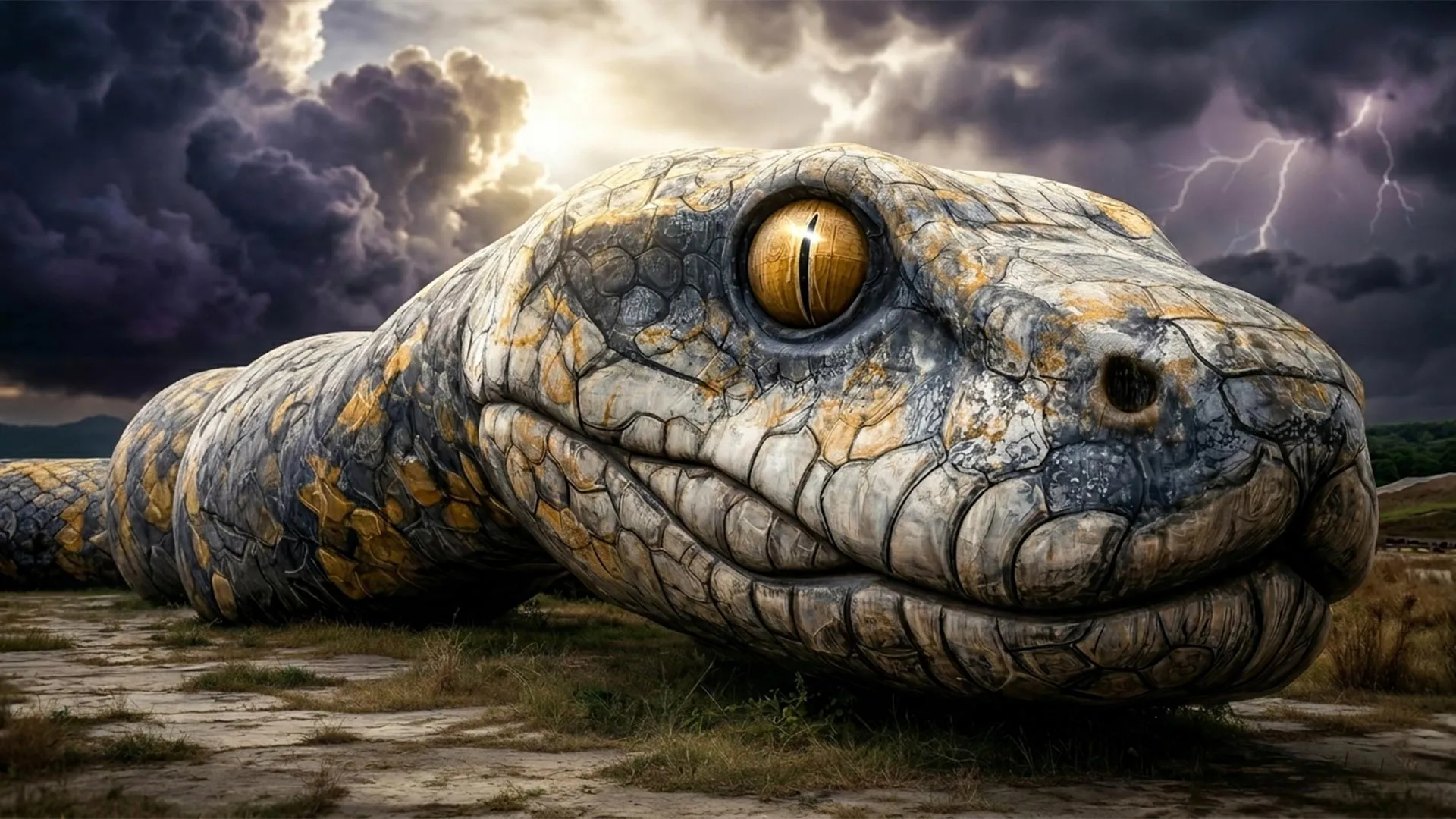
Vasuki indicus is a species of extinct snake identified from fossilized vertebrae unearthed in western India. It belongs to the Madtsoiidae family, a group of large, non-venomous snakes that thrived in the Cretaceous and Paleogene periods. The significance of Vasuki indicus lies in its enormous size—estimated at 11 to 15 meters (36–49 feet) in length—making it one of the largest snakes ever discovered. Its name is inspired by the mythical serpent king Vasuki from Hindu mythology, reflecting its grandeur. This find challenges previous assumptions about where giant snakes could evolve, suggesting that ancient India's warm, humid forests provided ideal conditions for massive reptiles. The specimen also helps scientists understand the evolutionary history of boid-like snakes and their distribution across Gondwanan landmasses.
2. Where was the fossil of Vasuki indicus discovered?
The fossilized remains of Vasuki indicus were excavated from a lignite (brown coal) mine in the Panandhro area of Gujarat, western India. Lignite mines often preserve ancient organic material, including plant debris and animal bones, because the sediments accumulate in swampy, oxygen-poor environments that slow decay. The discovery site is part of the Cambay Shale formation, which dates to the middle Eocene epoch, approximately 47 million years ago. At that time, the region was a lush, tropical coastal wetland teeming with life. The mine itself is operated by Gujarat Mineral Development Corporation, and the fossils were collected during routine mining operations before being brought to paleontologists for study. This location is especially important because it adds a crucial data point for understanding the biogeography of giant snakes in the ancient Tethyan realm.
3. How did scientists estimate the size of Vasuki indicus?
Because only vertebrae were found (not a complete skeleton), researchers used a method called vertebral scaling to estimate the snake's total length. They compared the dimensions of the fossilized bones—specifically the width and height of the vertebral centra—with those of living large constrictors like anacondas and pythons, as well as other extinct giant snakes such as Titanoboa. By establishing a ratio between vertebral size and body length in these modern analogues, scientists projected that Vasuki indicus reached between 11 and 15 meters. The range accounts for natural variation and the fact that the fossil comes from a mid-body region; tail or neck vertebrae might be slightly different. This technique is standard in paleontology for fragmentary specimens. The resulting estimate places Vasuki indicus firmly among the top contenders for the longest snake of all time, alongside Titanoboa and Gigantophis.
4. How does Vasuki indicus compare to Titanoboa?
Titanoboa cerrejonensis—the giant snake from Colombia that lived 60 million years ago—was previously considered the largest known snake, measuring 12.8 to 14.3 meters (42–47 feet) and weighing over a ton. Vasuki indicus overlaps significantly with that range, at 11–15 meters, meaning the Indian snake may have been equally massive or even slightly longer, though its body was likely less robust. Titanoboa had a thicker, heavier build suited for a fully aquatic lifestyle in a warm, swampy environment. Vasuki indicus, based on its vertebrae shape, appears to have been a thick-bodied but not quite as bulky constrictor, more similar to modern anacondas in form. The two snakes lived in different hemispheres and different epochs, showing that gigantic snakes evolved independently under similar tropical conditions. Together, they illustrate that the upper size limit for snakes may be governed by climate and prey availability rather than any hard biological ceiling.
5. What was the lifestyle and hunting strategy of Vasuki indicus?
The thick, robust vertebrae of Vasuki indicus suggest it was a powerful, slow-moving constrictor that favored ambush tactics, much like modern anacondas. Its estimated weight and girth would have made it less agile than slender tree-dwelling snakes, but perfectly adapted for lying in wait along riverbanks or in shallow waters. The snake likely preyed on large animals of its time, such as primitive elephants, crocodiles, or giant tortoises that inhabited the Eocene forests of India. A constrictor of this size would not need venom; instead, it would seize prey with its jaws, wrap its massive coils around the victim, and apply pressure until suffocation occurred. The warm climate (with average temperatures around 28–30°C) would have supported a high metabolism, allowing Vasuki indicus to grow to such extreme dimensions. This ecology mirrors that of Titanoboa, reinforcing the idea that tropical environments are key for producing giant snakes.
6. When did Vasuki indicus live, and what can we learn from its environment?
Vasuki indicus lived during the middle Eocene epoch, around 47 million years ago. This was a period of intense global warmth known as the Eocene Climatic Optimum, when tropical forests extended far toward the poles and sea levels were high. The discovery site in Gujarat was then a lowland coastal area with meandering rivers, mangrove swamps, and lush vegetation. The presence of such a large snake indicates a productive ecosystem with abundant large prey and stable warm temperatures year-round. Analyzing the sediments and associated fossils (including fish, turtles, and early mammals) helps paleontologists reconstruct this lost world. Moreover, the snake's existence on the Indian subcontinent—which was an isolated island continent at that time before colliding with Asia—suggests that giant snakes evolved separately in India, not only in South America. This challenges previous ideas that only the Amazon-like basins could produce colossal serpents.