10 Astonishing Secrets of Interstellar Comet 3I/ATLAS
Imagine a cosmic wanderer that traveled for eons across the galactic void, carrying clues to a planetary system utterly unlike our own. That is exactly what 3I/ATLAS is — an interstellar comet discovered hurtling through our solar system, and it holds a surprising chemical fingerprint: an extraordinary abundance of heavy water. This discovery is rewriting what we know about how worlds form beyond our Sun. Here are ten things you need to know about this alien visitor, from its frozen origin to its peek into star formation across the galaxy.
1. A Visitor from the Stars
3I/ATLAS is only the third interstellar object ever detected in our solar system, following the mysterious 'Oumuamua and comet Borisov. Its name comes from the Asteroid Terrestrial-impact Last Alert System (ATLAS) that first spotted it. Unlike objects born in our own Oort Cloud, this comet originated in another star system entirely. Its hyperbolic trajectory and high speed confirm that it is not bound by the Sun's gravity — it's just passing through on a one-way trip. For astronomers, 3I/ATLAS is a rare messenger from an alien planetary system, offering a direct sample of materials that formed around a different star billions of years ago.
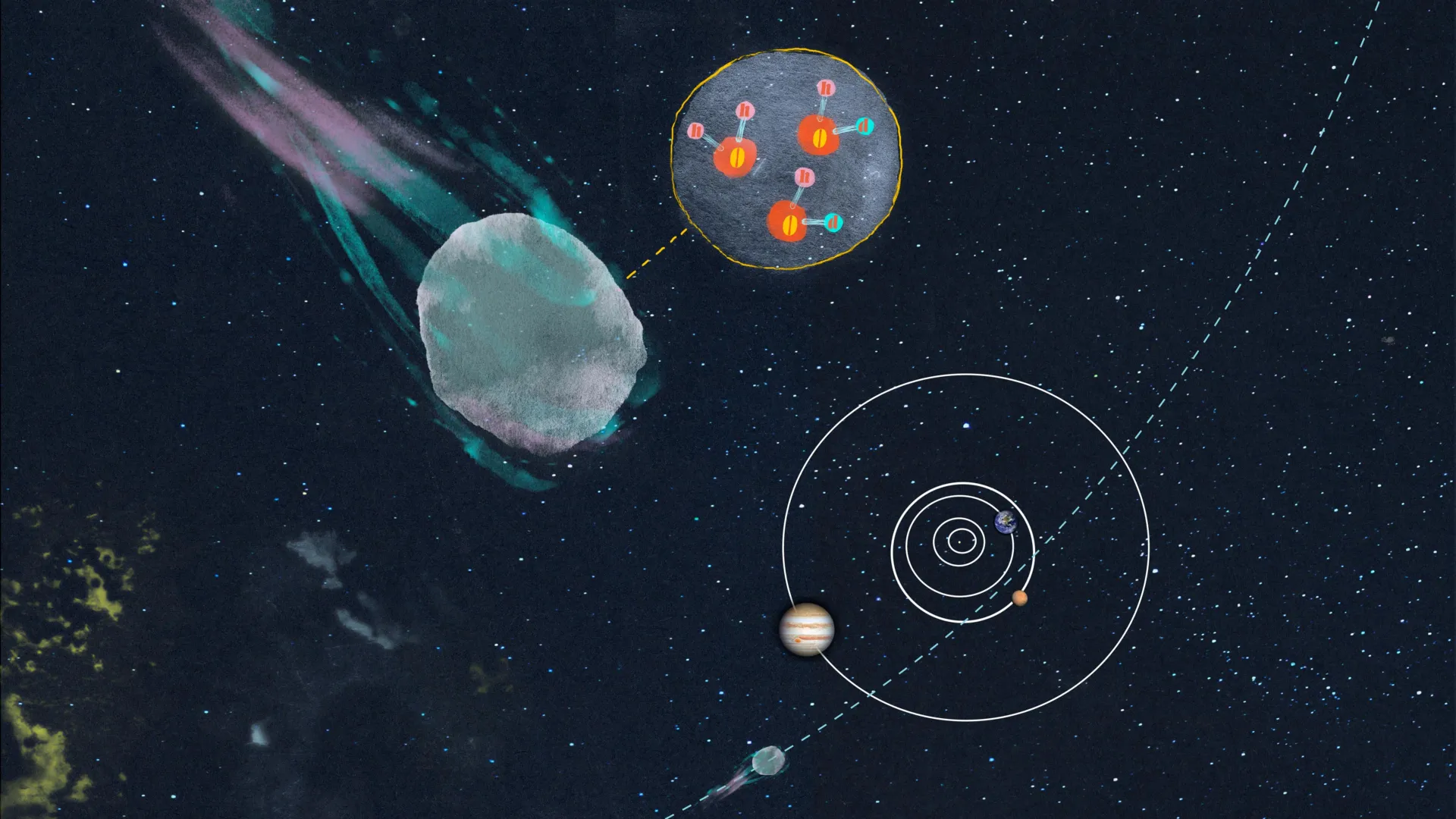
2. The Heavy Water Mystery
The most jaw-dropping discovery about 3I/ATLAS is its heavy water content. Heavy water is water where deuterium replaces normal hydrogen. In our solar system, this isotopic ratio varies widely, but 3I/ATLAS has a deuterium-to-hydrogen (D/H) ratio that is more than three times higher than Earth's oceans and higher than any comet or asteroid we've measured. This suggests the comet formed in an environment far colder and richer in deuterium than any region in the early solar system. It's a chemical fingerprint that points to a birth in a deep freeze, perhaps near a star that was both massive and short-lived.
3. A Cold, Dark Nursery
Where did 3I/ATLAS form? The extreme heavy water ratio implies a formation temperature below 30 Kelvin (about -405°F). In our solar system, such temperatures exist only in the most distant reaches, but even the Kuiper Belt isn't that cold. Scientists think 3I/ATLAS likely formed in the outer part of its original protoplanetary disk, possibly around a low-mass star or even a brown dwarf. At those temperatures, molecular fractionation processes favor deuterium, locking it into water ice. This alien comet is essentially a frozen time capsule from a place where the Sun's warmth never reached.
4. A Composition Unlike Any We've Seen
Beyond heavy water, the comet's overall composition raises eyebrows. Observations show a dearth of carbon monoxide (CO) compared to typical solar system comets. CO is highly volatile and should be present even at cold temperatures, so its low abundance hints that 3I/ATLAS spent most of its life at extremely low temperatures where CO can freeze out. The dust-to-ice ratio also appears unusual. Together, these traits paint a picture of a body that formed in a low-metallicity, cold environment far from any star's warmth — a cosmic outlier even among interstellar objects.
5. It's Not a Simple Ice Ball
Unlike many comets from our solar system, which are often described as dirty snowballs, 3I/ATLAS may be more like a ‘snowy dirtball.’ Its surface contains less ice than you'd expect, and it has a reddish color similar to some Kuiper Belt objects. The comet's activity as it approached the Sun was modest — it didn't develop the huge comae typical of Sun-grazing comets. This suggests a crust of non-volatile material holding most of the ice inside. It might be that 3I/ATLAS has a stronger, more sintered surface, possibly due to cosmic ray processing during its million-year journey through the galaxy.
6. A Clue to How Planetary Systems Differ
One of the biggest questions in astronomy is whether the recipe for building planets is universal. 3I/ATLAS suggests the answer might be ‘no.’ The dramatic difference in D/H ratios between this comet and any local body implies that the chemical conditions in its home system were fundamentally different. Perhaps its star lacked heavy elements, or its disk experienced a different history of irradiation and mixing. By studying 3I/ATLAS, we get a taste of the diversity that exists out there — and a reminder that our own solar system is just one of countless possible outcomes.
7. It's Surprisingly Large
Initial estimates pegged 3I/ATLAS as a modestly sized object, but recent observations using the Hubble Space Telescope and ground-based radars suggest its diameter is about 1.5 kilometers (nearly a mile). That might not sound huge, but it's significantly larger than most comets we've observed from interstellar space. 'Oumuamua was roughly 100-200 meters, and Borisov was about 1 km. 3I/ATLAS is both larger and more pristine. Its size means it can preserve more of its original volatiles, giving astronomers a better chance to measure its composition accurately.
8. An Accelerated Journey Through the Solar System
3I/ATLAS is moving at a blistering 35 kilometers per second relative to the Sun — fast enough to cover the distance from Earth to the Moon in just under three hours. Its trajectory is hyperbolic, meaning it came from interstellar space and will eventually exit our solar system forever. Astronomers are racing to observe it before it fades away. As of mid-2025, it's still visible with large telescopes, but its brightness is decreasing. This fleeting visit is a golden opportunity to gather data that could take decades to interpret.
9. What It Tells Us About the Early Universe
The chemistry of 3I/ATLAS may hold clues not just to another star, but to the conditions of the early galaxy. The heavy water ratio is so high that it might indicate a formation environment with a low cosmic-ray flux, or a particular kind of interstellar chemistry. Some scientists theorize that such extreme D/H ratios could only have been possible in the first few billion years after the Big Bang, before galactic chemical evolution diluted the deuterium. In a way, 3I/ATLAS could be a fossil of an ancient star-forming region, preserved in deep freeze for eons.
10. The Search Has Only Begun
3I/ATLAS is not the last interstellar object we'll see — in fact, new surveys like the Vera C. Rubin Observatory Legacy Survey of Space and Time (LSST) are expected to find dozens more each year. Each visitor will add a piece to the puzzle of how planets and comets form across the galaxy. The heavy water mystery is just the beginning. Future telescopic observations, and maybe even a dedicated spacecraft intercept mission, could answer the pressing questions: Do other planetary systems produce life-giving water like Earth's? Or is our oceans' unique D/H ratio a cosmic accident? 3I/ATLAS has opened a new window.
In summary, the interstellar comet 3I/ATLAS is far more than a passing curiosity. Its extraordinary heavy water abundance has forced astronomers to reconsider the diversity of planetary systems. This alien wanderer, forged in a frozen cradle billions of years ago, carries a chemical message from a sun that no longer exists. As we continue to scan the skies for more such visitors, each one will help decode the universal rules of planet building — and maybe reveal if our own watery world is a rare gem or just one of many.