How to Build a Multi-Agent System for Smarter Advertising
Introduction
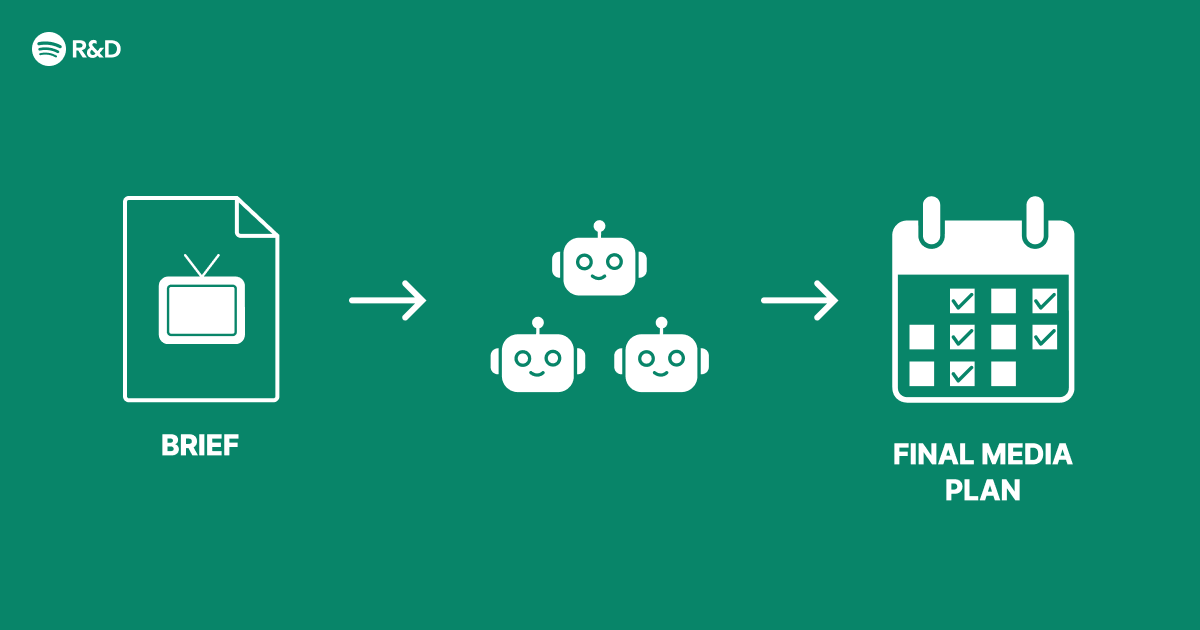
In the world of digital advertising, achieving relevance and efficiency at scale often requires moving beyond single-model approaches. A multi-agent architecture distributes decision-making across specialized agents—each handling a unique aspect of the ad lifecycle—to create a smarter, more adaptive system. This guide walks through the key steps to design and deploy such a system, based on principles used in production environments like Spotify's advertising platform.
What You Need
- Clear advertising goals (e.g., improve CTR, reduce cost per acquisition, increase relevance)
- Access to historical ad performance data (impressions, clicks, conversions, user interactions)
- Machine learning framework (e.g., TensorFlow, PyTorch, or scikit-learn)
- Message-passing infrastructure (e.g., RabbitMQ, Apache Kafka, or gRPC)
- Orchestration tool (e.g., Kubernetes, Airflow, or custom scheduler)
- Monitoring and logging stack (e.g., Prometheus, Grafana, ELK)
- Team with expertise in ML engineering, software architecture, and ad operations
Step-by-Step Guide
Step 1: Define Agent Roles and Responsibilities
Start by mapping out the distinct functions your advertising system needs. Typical agents include:
- Targeting Agent: Selects the best audience segments for each ad impression.
- Creative Agent: Chooses or generates the ad creative (image, copy, layout).
- Bid Agent: Sets the bid price within programmatic auctions.
- Budget Agent: Allocates campaign budgets over time.
- Analytics Agent: Tracks performance and triggers updates to other agents.
Clearly document each agent's input, output, and decision-making logic. This modular design lets you iterate on individual agents without rewriting the whole system.
Step 2: Choose a Communication Protocol
Agents must share information reliably. We recommend a publish-subscribe model with a message broker (e.g., Kafka) or a request-reply pattern using gRPC. Key considerations:
- Message schema: Use a schema registry (e.g., Avro, Protobuf) to enforce compatibility.
- Latency: For real-time bidding, aim for sub-100ms end-to-end response.
- Fault tolerance: Implement retries and dead-letter queues for failed messages.
Step 3: Implement Coordination and Shared State
Agents need a common understanding of context. Set up a shared state store (e.g., Redis, etcd) that holds:
- Current campaign goals and constraints
- Real-time performance metrics
- Global coherence parameters (e.g., frequency capping, budget limits)
Ensure that all agents read from the same source before making decisions. Use atomic operations to prevent race conditions when multiple agents update the state.
Step 4: Build and Train Individual Agents
Each agent can be a separate ML model or rule-based system. For example:
- The Targeting Agent might be a neural network predicting user intent.
- The Bid Agent could be a reinforcement learning model optimizing for ROI.
- The Creative Agent might use a recommendation model trained on A/B test results.
Train each agent on historical data, but include features that other agents' outputs would generate during inference (e.g., a predicted click-through rate from the Targeting Agent as input to the Bid Agent).
Step 5: Define the Orchestration Flow
Decide how agents are invoked. A typical flow for a single ad request:
- The Budget Agent checks if the campaign still has budget.
- If yes, the Targeting Agent scores the user and passes the top segments to the Creative Agent.
- The Creative Agent selects the best creative and sends it with the segments to the Bid Agent.
- The Bid Agent calculates a bid price, and the system submits the bid to the ad exchange.
- After the auction, the Analytics Agent records the outcome and updates the shared state.
Use a lightweight workflow engine (e.g., Temporal, Airflow) or a custom coordinator service. For high-throughput systems, consider asynchronous, event-driven execution.

Step 6: Integrate with Existing Infrastructure
Your multi-agent system must plug into existing ad servers, data pipelines, and reporting tools. Common integration points:
- Ad server API: Send bids and creative selection results.
- Data lake/warehouse: Feed historical data for training and log inference logs.
- Monitoring dashboard: Expose agent-level and system-level metrics.
Gradually replace legacy decision-making modules with the new agents, using A/B testing to measure impact.
Step 7: Test Individual and System Behavior
Begin with unit tests for each agent's decision logic. Then run integration tests in a staging environment that simulates real ad traffic. Important checks:
- Does each agent respect its input constraints?
- Is message latency acceptable?
- Do agents converge to coherent decisions (e.g., don't overspend or serve contradictory creatives)?
Use canary deployments to roll out to a small percentage of real traffic before full launch.
Step 8: Monitor and Iterate
After deployment, set up dashboards tracking:
- Per-agent performance (e.g., prediction drift, decision latency)
- System-level KPIs (e.g., overall ad revenue, user satisfaction metrics)
- Error rates and message queue backlogs
Feed this data into a continuous improvement pipeline. Retrain agents periodically, and consider adding new agents as advertising requirements evolve (e.g., a fairness agent to enforce brand safety).
Tips for Success
- Start simple: Begin with 2-3 agents and expand only after validating the architecture.
- Design for explainability: Log each agent's decision and rationale for debugging and compliance.
- Use feature store: A central feature store (e.g., Feast) ensures all agents use consistent, up-to-date features.
- Plan for failure: Introduce circuit breakers and fallbacks if an agent becomes unresponsive.
- Invest in simulation: Create a replay system that feeds old ad requests through the multi-agent pipeline to test changes offline.
- Align with business goals: Regularly validate that agent behavior matches campaign objectives (e.g., brand awareness vs. direct response).
Building a multi-agent architecture for advertising is an iterative process. By breaking down monolithic decision-making into specialized, communicating agents, you can achieve greater flexibility, scalability, and performance. The key is to start with a clear decomposition of responsibilities, choose robust communication patterns, and relentlessly monitor and improve each component.