Juno's Glimpse of Thebe: A Tiny Moon of Jupiter
NASA's Juno spacecraft has once again delivered a stunning view of the Jovian system, this time capturing a rare image of Jupiter's small moon Thebe. This Q&A explores the details of this observation, the moon itself, and what it reveals about the giant planet's neighborhood.
What is Thebe and why is it interesting?
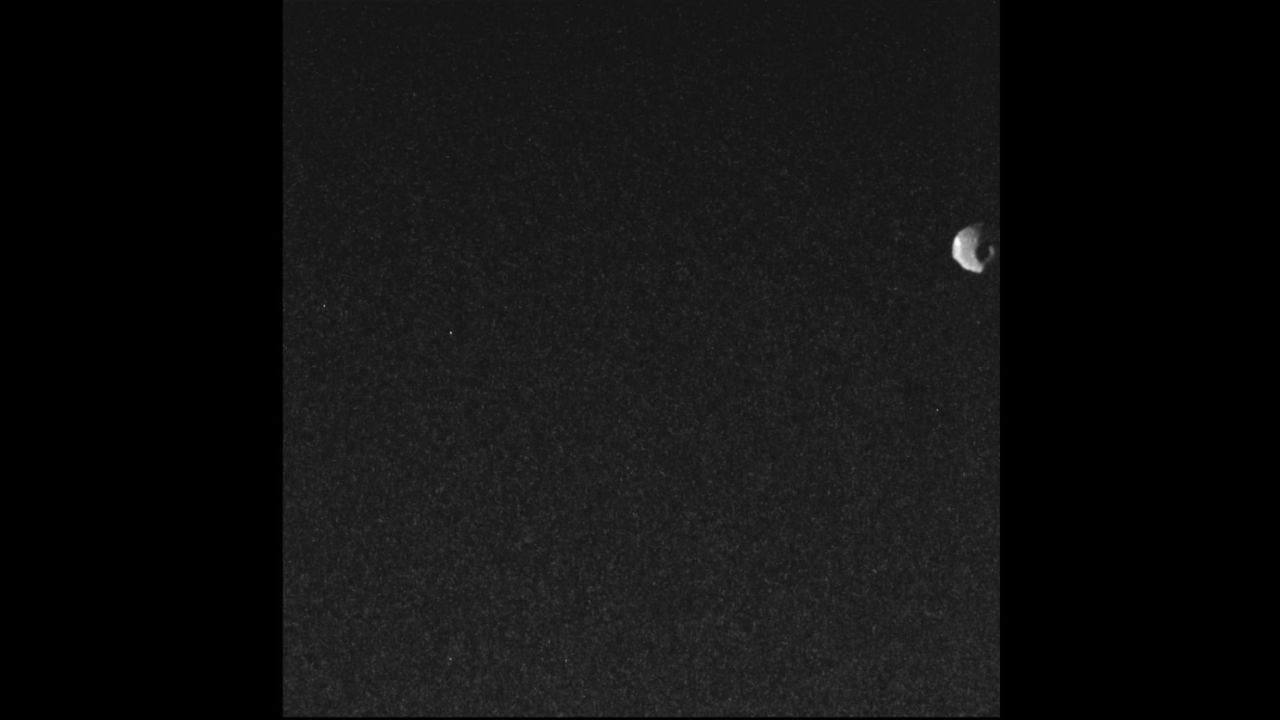
Thebe is one of Jupiter's inner moons, first discovered by the Voyager 1 spacecraft in 1979. It is a small, irregularly shaped body about 49 kilometers in diameter. Thebe orbits Jupiter within the planet's faint ring system, and its surface is heavily cratered. What makes Thebe particularly intriguing is that it may be a source of dust for Jupiter's rings. The moon's close proximity to Jupiter (approximately 222,000 km from the planet's center) subjects it to intense tidal forces, and its reddish color suggests a mix of rock and ice. Studying Thebe helps scientists understand the formation and evolution of Jupiter's moon system and the dynamics of ring-moon interactions.
How did Juno capture this photo of Thebe?
The image was taken by JunoCam, the visible-light camera aboard NASA's Juno spacecraft, during a close flyby of Jupiter. Juno's highly elliptical polar orbit occasionally brings it within a few thousand kilometers of the planet's cloud tops, providing excellent opportunities to observe Jupiter's faint rings and small moons. For this particular observation, the spacecraft was positioned such that Thebe was illuminated by sunlight and appeared as a bright point or small disk against the dark sky. The camera's filters and exposure were adjusted to capture the moon's faint details despite its small angular size. Juno's trajectory and timing allowed it to snap the image as part of its ongoing mission to study Jupiter's composition, magnetic field, and gravity, with bonus science targets like the moons.
What does this photo tell us about Thebe and Jupiter's system?
This recent image confirms Thebe's irregular shape and provides updated information on its surface brightness and color. By comparing with earlier observations from Voyager and Galileo, scientists can track any changes in Thebe's surface or orbit. The photo also helps refine models of how Thebe interacts with Jupiter's ring system. The moon is believed to shed dust particles due to meteoroid impacts, contributing to the tenuous Gossamer Ring. Additionally, the image aids in mapping Thebe's topography, which can reveal its internal structure and collision history. Such data are crucial for understanding the evolution of small moons in the harsh Jovian environment, including radiation and tidal heating effects.
Why is JunoCam important for such observations?
JunoCam is a unique instrument designed primarily for public outreach and education. It was never intended as a primary science instrument, but its high-resolution images have proven scientifically valuable. The camera can capture detailed color images of Jupiter's cloud tops and, when the geometry is right, its faint rings and moons like Thebe. JunoCam's flexibility allows it to be pointed at targets of opportunity during the mission. Because Juno orbits Jupiter in a polar trajectory that avoids the planet's most intense radiation belts, it can make close approaches to the planet and some moons while remaining safe. The camera's continued operation beyond its planned lifetime has enabled unexpected discoveries, including the first detailed views of small inner moons like Thebe in many years.
What are the challenges in photographing Thebe from Juno?
Photographing Thebe is challenging due to its small size, low brightness, and proximity to Jupiter's intense radiation. The moon is only about 49 km across and appears as a tiny speck even from Juno's closest approaches. To capture it, JunoCam must be precisely aimed, and the spacecraft must be in the correct orbital phase. Additionally, Jupiter's bright glow can overwhelm the faint signal from Thebe, requiring careful exposure settings and image processing. The radiation environment near Jupiter also degrades camera electronics over time, so every observation is a delicate balance between science gain and instrument safety. Finally, the timing of the flyby must coincide with illumination from the sun—the moon must be in sunlight, not in Jupiter's shadow, to be visible. These constraints make each successful image of Thebe a notable achievement.
What other moons has Juno observed besides Thebe?
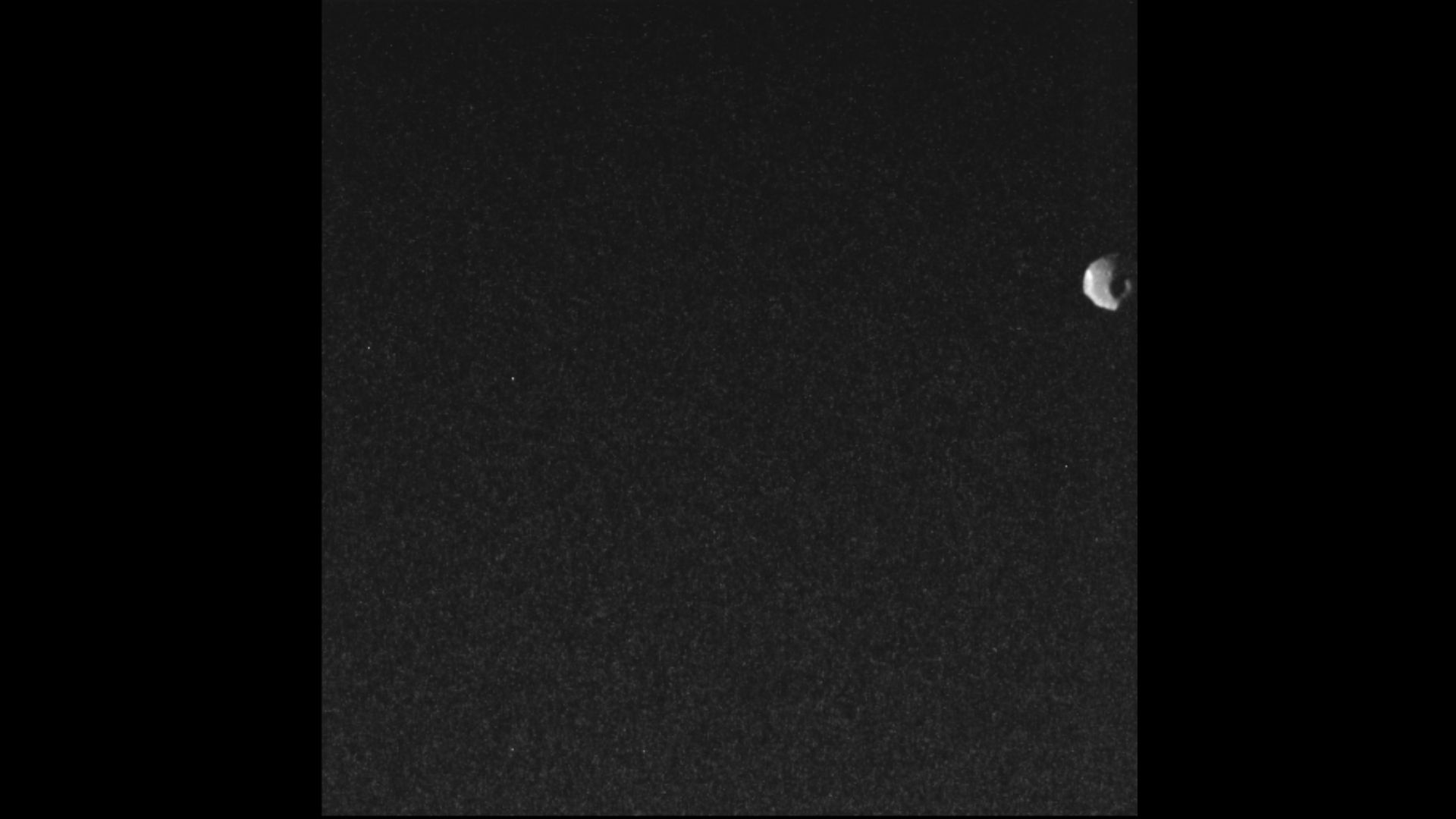
In addition to Thebe, Juno has captured images of several other Jovian moons, including the four large Galilean moons: Io, Europa, Ganymede, and Callisto. These observations have provided stunning views of volcanic activity on Io, ice features on Europa, and the surface textures of Ganymede and Callisto. Juno has also imaged the smaller inner moons like Amalthea, Adrastea, and Metis. For Amalthea, Juno obtained the highest-resolution images ever taken, revealing a reddish, potato-shaped body with signs of impact cratering. These moon observations are often serendipitous, happening when Juno's orbit aligns favorably. They complement the primary mission of studying Jupiter's interior and atmosphere, offering a broader understanding of the planet's diverse satellite system. Each new image helps refine models of moon formation and evolution in a giant planet environment.
What is the significance of this observation for future missions?
This observation of Thebe provides a valuable data point for future missions to the Jovian system, such as ESA's JUICE (Jupiter Icy Moons Explorer) and NASA's Europa Clipper. High-resolution images of small inner moons help characterize the hazardous dust and debris environment near Jupiter, which spacecraft must navigate. Understanding Thebe's orbit and surface properties improves risk assessments for future orbital insertions or flybys. Additionally, the images contribute to the scientific context for studying how small moons interact with Jupiter's magnetosphere and rings. By documenting the current state of Thebe, scientists can compare it with later observations to detect any changes, such as shifts in orbit or surface modifications. Such baseline data are crucial for long-term monitoring of the dynamic Jovian system, ensuring that future explorers are well-prepared to answer deeper questions about the formation and evolution of our solar system.